
Journal · Provenance & Restoration
A Piece of San Francisco History Finds a New Home
Salvaged I. Magnin marble, an antique washbasin, and why beautiful things deserve another chapter.
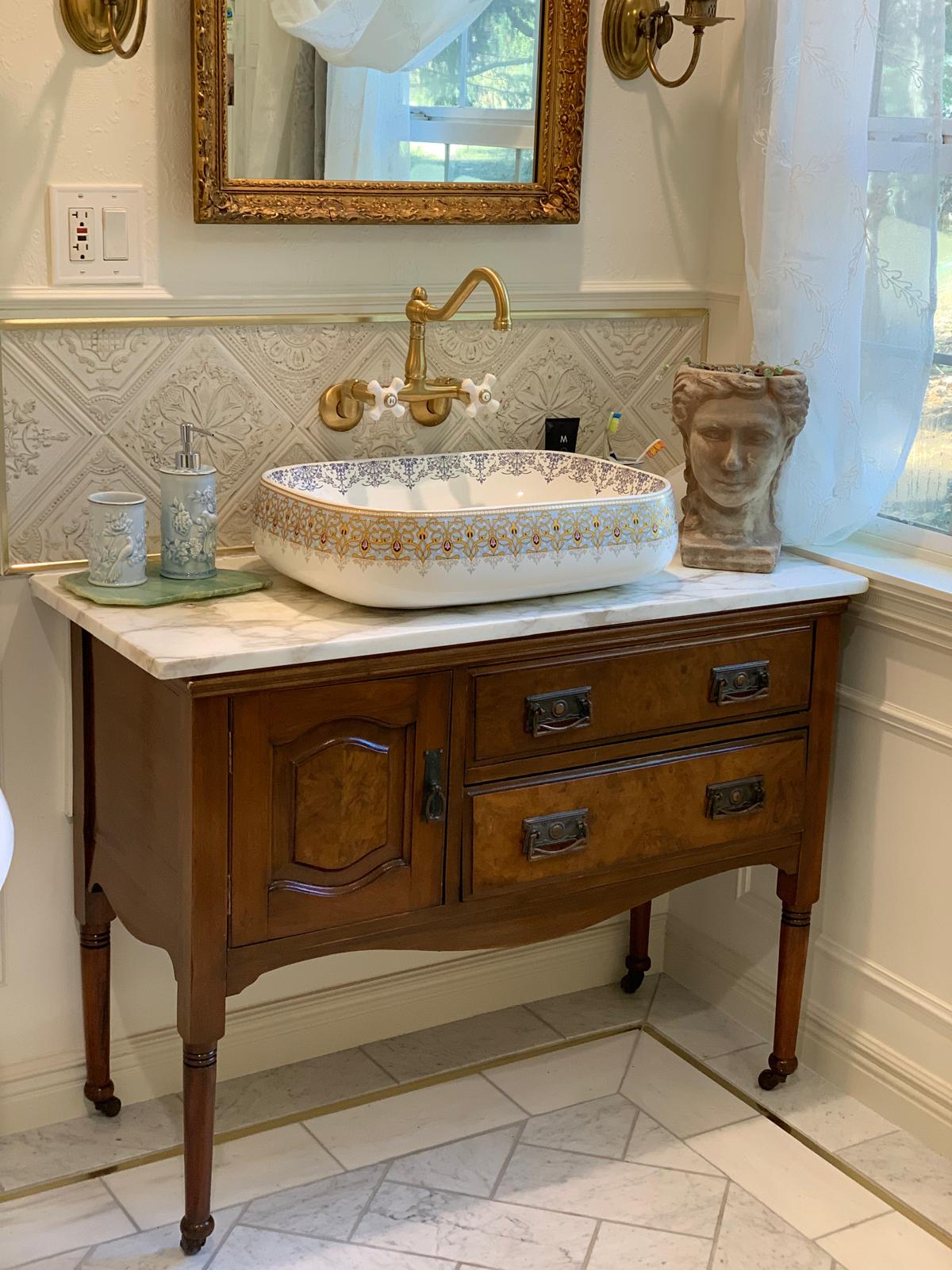
I have always been drawn to things that have a history.
There is something very different about holding a piece of stone, furniture, hardware, or architectural detail that existed long before it came into my hands. Someone chose it. Someone made it. It belonged somewhere. It was part of another person’s everyday life.
“When I find something like that, I don’t immediately see what it was. I start imagining what it could become.”
That is exactly what happened with this marble.
From I. Magnin in San Francisco
I grew up near San Francisco, so I knew the name I. Magnin. It wasn’t simply a place to buy clothes. For generations of San Franciscans, it represented an entirely different era of shopping and luxury.
I. Magnin was founded in San Francisco in 1877. Its famous Union Square flagship opened in 1948 in a building designed by architect Timothy Pflueger. The store became known for extraordinary interiors and an extensive use of marble, bronze, glass, gilding, and beautifully crafted details.
It was the kind of place where the surroundings were part of the experience.
Women came to I. Magnin for beautiful clothing, evening gowns, and things they might wear to the opera or one of San Francisco’s social events. The women’s dressing and powder areas reflected that world, with marble, gilt mirrors, and elegant places to sit and prepare.
By the 1990s, that era was ending. I. Magnin closed, and the building became part of Macy’s. During the renovation, much of the old interior was removed. Some of it, thankfully, survived.
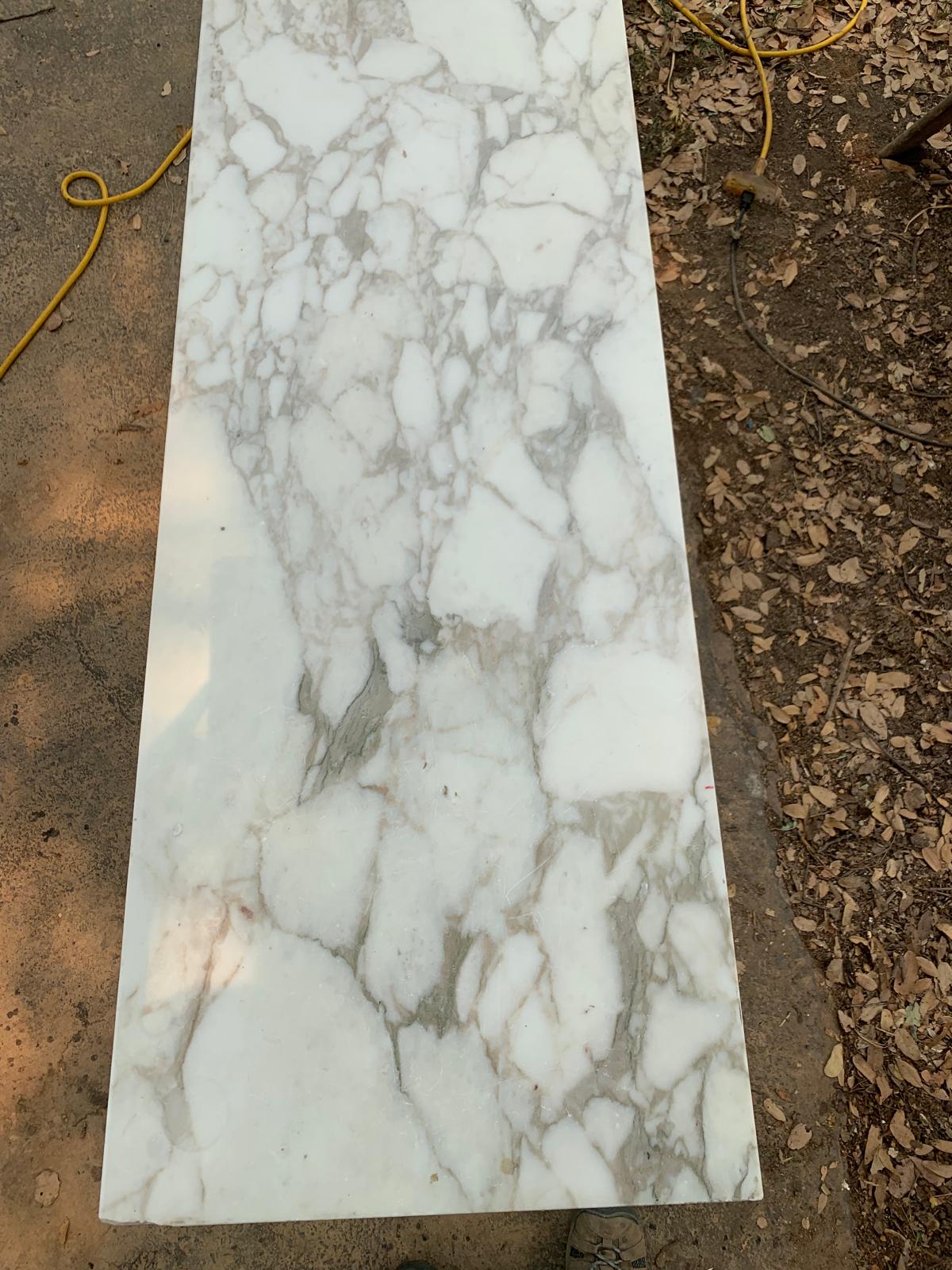
Years later, I had the opportunity to acquire a large slab of marble that came to me with the provenance that it had been salvaged from the women’s dressing and preparation area of the old San Francisco I. Magnin.
As soon as I saw it, I loved it—not because it was perfect, but because it wasn’t.
The stone had already lived a life. Its white ground was filled with wonderful gray, taupe, and warmer veins, with the variation that only natural stone can create. Knowing where it had come from made it even more interesting to me.
I couldn’t help imagining the women who had once stood around it—getting ready, adjusting a dress, checking their makeup before dinner or the opera, going about lives that existed in a San Francisco very different from the one we know today.
That history mattered to me.
Then I Had Another Old Piece With a Problem
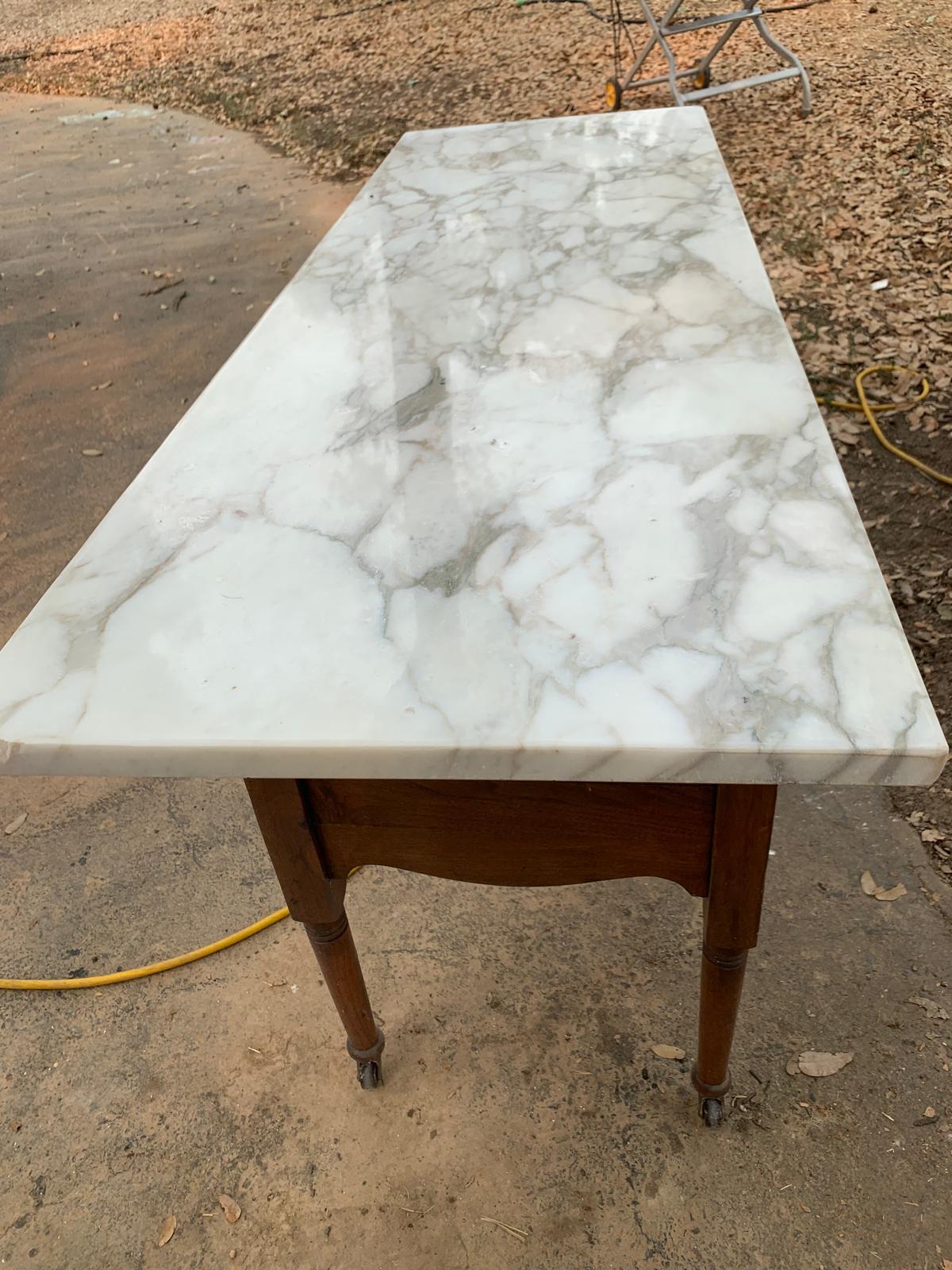
I already owned an antique washbasin that I wanted to use in the bathroom. It was beautiful, but its original marble top had been broken.
I could have simply ordered a new piece of marble. But that wouldn’t have been nearly as interesting.
Here was an antique washbasin that had survived but lost part of what made it complete. And here was this wonderful old piece of San Francisco marble that had survived after the interior it belonged to disappeared.
Why not bring the two together?
So I did.
I measured the antique, worked out my cuts, and used a section of the I. Magnin marble to create a replacement top.
Suddenly the washbasin was a washbasin again.
It was not restored to exactly what it had been originally, nor turned into something pretending to be old. Instead, two genuinely old things with completely different histories had become one functional piece.
I love that.
And I Couldn’t Throw Away the Rest
This is probably where my personality really comes through. When I have beautiful material left from a project, I have a very difficult time throwing it away—especially marble with this kind of history.
After cutting the vanity top, I still had usable pieces of the I. Magnin stone. One particularly beautiful section became an inset in the wall beside the freestanding bathtub.
I treated it almost like artwork. Instead of buying another decorative object for that part of the room, the material itself became the decoration.
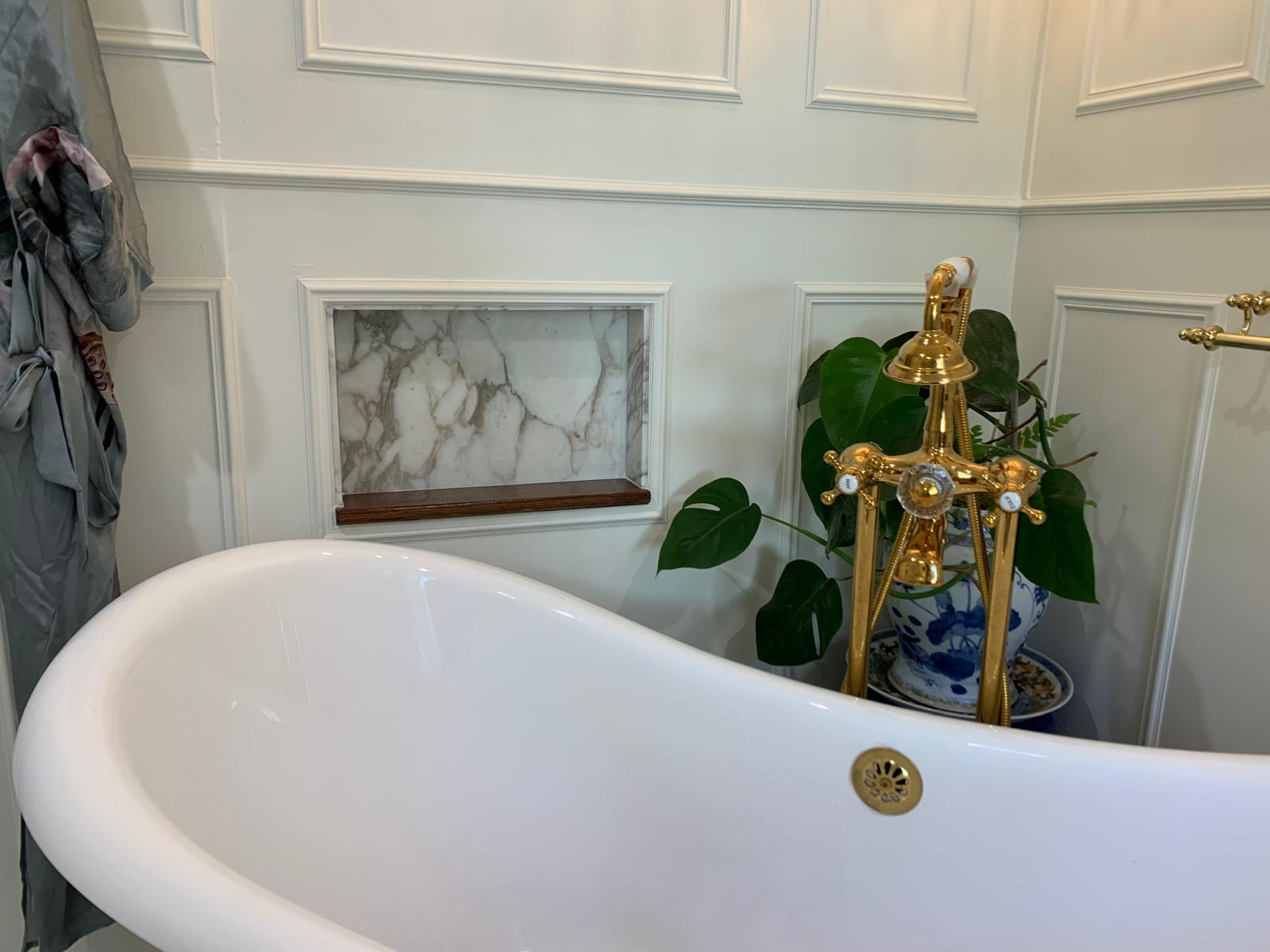
Now there is a quiet connection across the bathroom. You don’t necessarily walk in and immediately know that these pieces of marble came from the same enormous slab—or that the slab once belonged to one of San Francisco’s legendary stores.
You discover that story.
That is exactly the kind of detail I love in a home.
The History Was Already There
When the bathroom was finished, I didn’t have to manufacture a story for it. The story already existed.
The antique washbasin had one history. The I. Magnin marble had another. The mirror, brass, tile, and other details added their own layers. And now all of them belong to the history of this house.
Someday someone may stand at this washbasin without knowing that the marble in front of them once belonged to I. Magnin in San Francisco.
But I know.
And I love knowing.
Because to me, a beautiful home isn’t created by ordering an entire room at once. It develops in layers—from the people who live there, the places they’ve traveled, the things they’ve inherited, the objects they’ve collected, and sometimes the wonderful old things someone else was willing to let go.
A well-designed home should tell the story of the people who live there.
Sometimes, if we’re lucky, the things we bring into it arrive with stories of their own.