
From the Atelier
Drawing the Architecture in Millwork
European-Style Home · Formal Dining Room · Ocala, Florida
Return to the JournalOnce the scenic mural was installed, the adjoining walls suddenly looked too plain.
The mural had tremendous depth—trees, landscape, sky and a distant castle—while the remaining walls were essentially blank. I didn't want to compete with the mural by covering every surface with pattern. Instead, I wanted the architecture itself to carry some of that visual weight.
So I began drawing on the walls with millwork.
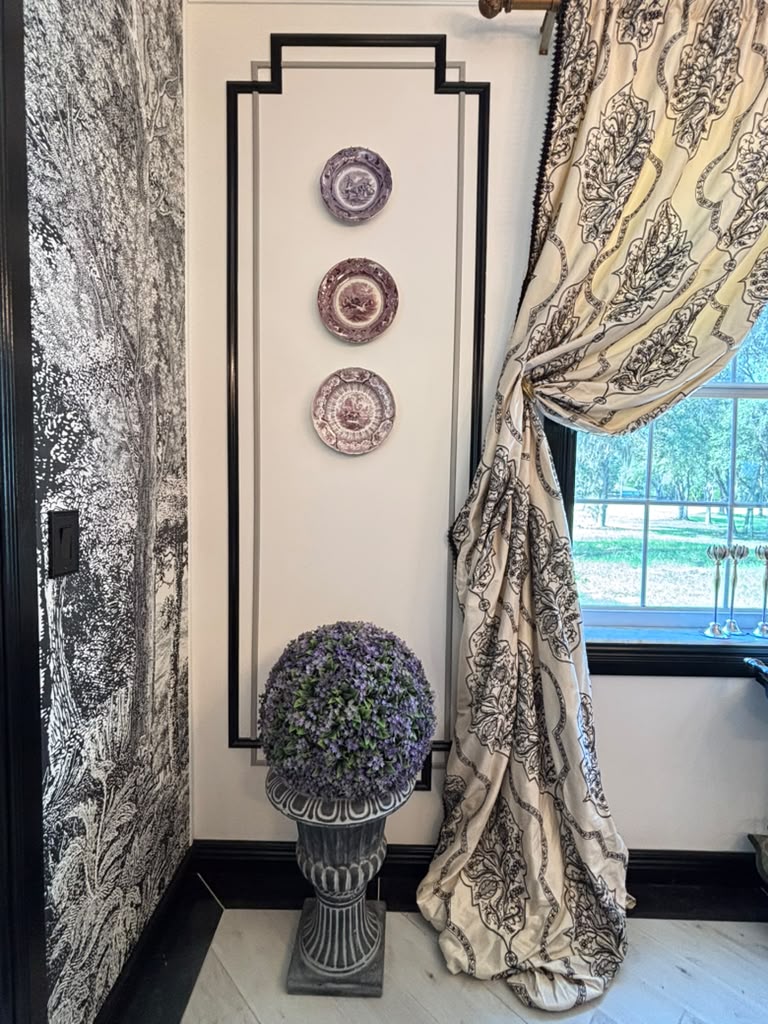
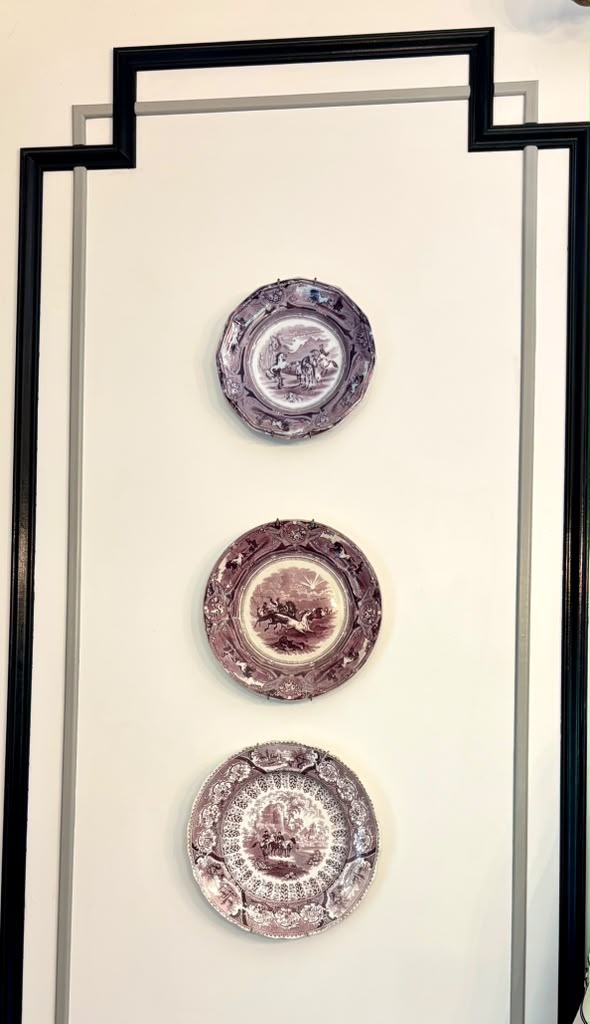
I created tall architectural panels using two different layers of molding in black and tonal gray. Rather than simply placing one frame inside another, I designed the lines to cross and move behind one another.
They remind me a little of vines intertwining around a tree.
That detail also allowed me to pull the gray of the mural into the quieter walls while the black connects visually to the marble floor border, window casing, baseboards, doors and other dark architectural elements throughout the room.
The openings received another level of treatment.
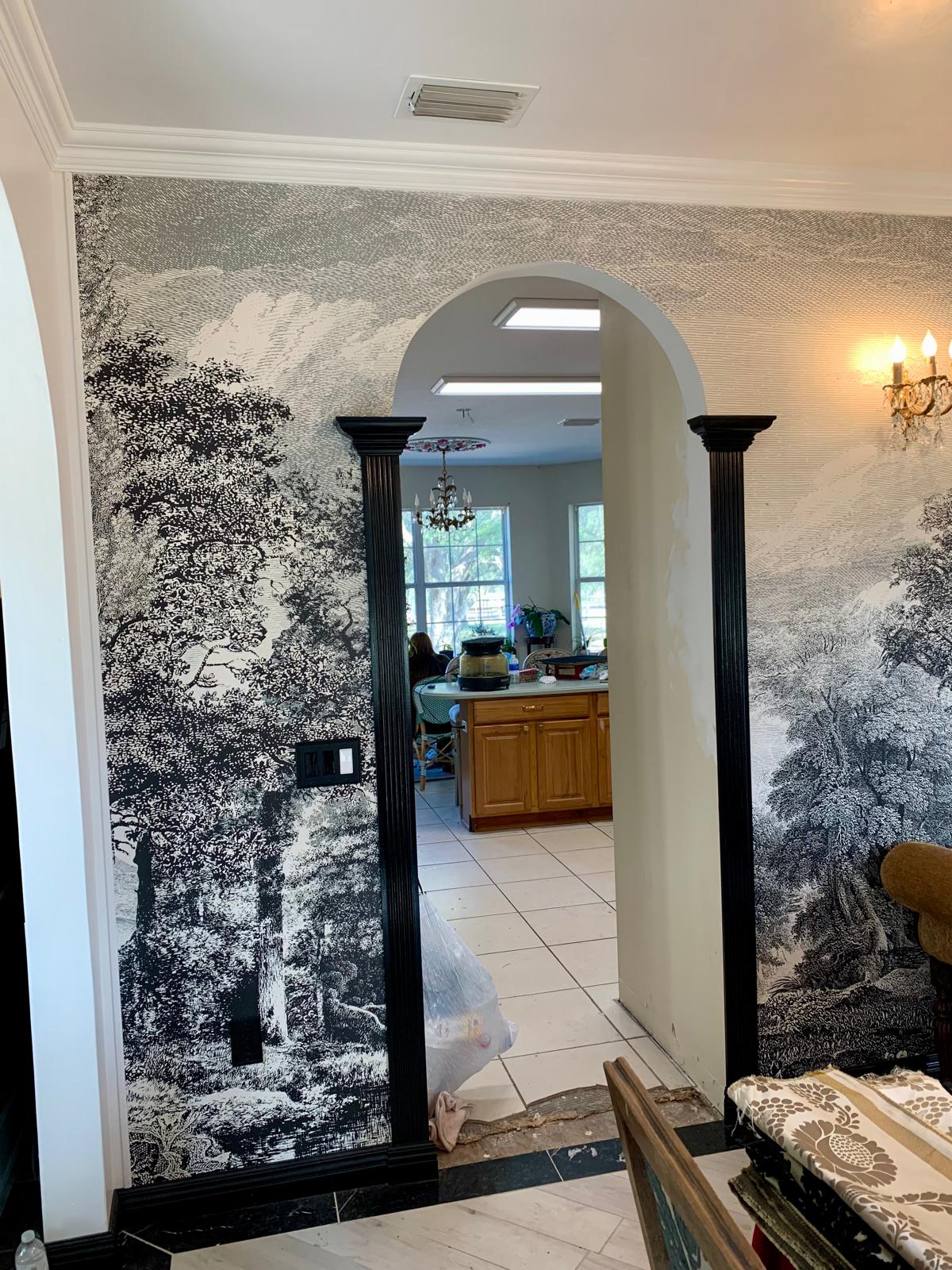
The original doorway was transformed into an arched opening, changing the transition into the room and introducing another old-world European architectural reference. I built up the sides with several pieces of molding rather than using a single casing, giving the opening more depth and presence.
The French doors received the same consideration. Instead of ordinary casing, I combined multiple molding profiles to create a substantial traditional surround and built-up header. Historically inspired millwork often works exactly this way—individual profiles are layered to create deeper shadow lines and a stronger architectural hierarchy around an opening.
None of these decisions existed independently.
The gray line speaks to the mural.
The black line speaks to the marble.
The door casing speaks to the archways.
The layers of molding give the quieter walls enough architecture to stand beside the landscape.
“I think of millwork almost like drawing architecture onto a room. A flat wall can become something entirely different once you start adding line, proportion, depth and shadow.”
And there's another layer underneath all of it that you don't immediately see: the mathematics.